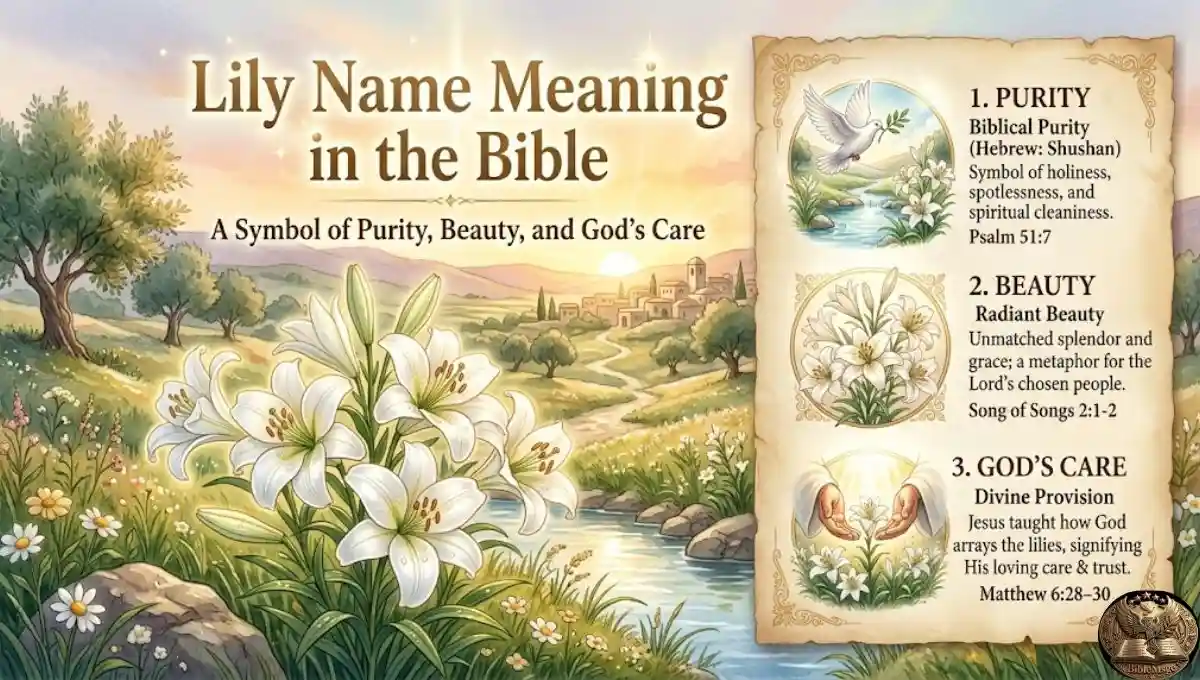
The lily name meaning in the Bible is deeply connected to purity, beauty, faith, and God’s loving care. Throughout Scripture, lilies are used as powerful symbols of innocence, spiritual peace, and divine provision. Jesus Himself mentioned the lilies of the field in Matthew 6:28–29 to teach believers about trusting God instead of living in fear or worry. Because of this, the name Lily carries a gentle yet meaningful spiritual message for Christians seeking hope, renewal, and a closer relationship with God.
Many people are drawn to the name Lily because it represents grace, humility, and inner beauty. In biblical symbolism, the lily reminds believers that God watches over His children just as He cares for the flowers of the field. Whether you discovered the name during prayer, a dream, or Bible study, understanding the lily name meaning in the Bible can reveal a beautiful reminder of God’s peace, protection, and everlasting love
Biblical Meaning of the Lily in the Bible
The biblical meaning of lily goes far beyond a pretty flower. In Scripture, the lily represents purity, divine provision, and effortless beauty. It appears in both the Old and New Testaments, always carrying a sense of sacred significance.
Lily as a Symbol of Purity
In biblical symbolism, the lily is most closely associated with purity and innocence. Its white petals became a natural image for a clean heart before God. Early Christian writers consistently used the lily to represent moral cleanness and devotion to God without compromise.
Lily and God’s Provision
One of the most powerful lily meanings in the Bible comes from Jesus’s own words. He used the lily as living proof that God clothes and cares for His creation. If God provides beauty for a wildflower, how much more will He provide for His people? This is the heart of the lily’s spiritual message.
Lily as Beauty Without Pride
What sets the lily apart from human achievement is that it does nothing to earn its beauty. It simply grows as God designed it. This is a direct spiritual lesson: true grace and beauty come from God alone, not from personal effort or pride.
Positive Meaning of the Lily Name
The name Lily, when given to a child, carries all these qualities forward. It is a name that speaks of purity of heart, quiet grace, and trust in God. Parents who choose this name often do so with the hope that their daughter will reflect these gentle, faith-filled qualities throughout her life.
| Symbol | Biblical Meaning | Key Reference |
| White Petals | Purity and innocence | Song of Solomon 2:1 |
| Wild Growth | God’s provision without effort | Matthew 6:28-29 |
| Natural Beauty | Beauty without pride or vanity | Luke 12:27 |
| Abundance | Spiritual renewal and hope | Hosea 14:5 |
Bible Verses About Lilies and Their Meaning
Several key Bible verses about lilies give us a clear picture of what this flower represents spiritually. Each passage adds a different dimension to the lily’s meaning in the Bible.
Read Also: Eliana Meaning in Bible: A Beautiful Name Rooted in God’s Answer
Matthew 6:28-29 and Trust in God
In Matthew 6:28-29, Jesus tells His disciples to observe how the lilies of the field grow. They do not labor or spin, yet even Solomon in all his glory was not dressed as beautifully as one of these. This passage is the cornerstone of lily symbolism in the Bible and a direct call to trust God over anxiety.
Song of Solomon and the Lily Symbol
In Song of Solomon 2:1, the beloved declares herself “a lily of the valleys.” This poetic image connects the lily to love, devotion, and spiritual intimacy. Many Bible scholars interpret this as a picture of the soul’s relationship with God humble, fragrant, and beautifully placed by divine design.
Lilies as a Reflection of God’s Creation
The prophet Hosea uses the lily image in Hosea 14:5, where God promises that Israel will “blossom like a lily” after returning to Him. Here the lily becomes a symbol of national and personal restoration, a beautiful image of what spiritual renewal looks like after a season of wandering.
| Verse | Book | Core Message |
| Matthew 6:28-29 | New Testament | Trust God; He provides more than Solomon’s glory |
| Song of Solomon 2:1 | Old Testament | The lily as humble, devoted love |
| Hosea 14:5 | Old Testament | Restoration and spiritual renewal |
| Luke 12:27 | New Testament | God’s care shown through creation’s beauty |
Spiritual Significance and Symbolism

The spiritual meaning of lily extends into personal faith in meaningful ways. It is not just a historical or poetic symbol, it is a living reminder of how God interacts with His people.
Lily as Spiritual Rest
The lily grows without striving. In a culture that constantly pushes people to do more and achieve more, the lily is a biblical picture of spiritual rest. It trusts the ground it is planted in and the rain that comes. This mirrors the biblical call to rest in God’s promises rather than our own strength.
Symbol of Renewal and Hope
Because lilies bloom after harsh winters and appear fresh each spring, they naturally carry the message of hope and renewal. In Christian symbolism, this connects directly to resurrection and new life in Christ. The lily is often associated with Easter for this very reason.
Personal Faith Connection
For someone named Lily, or for anyone drawn to this flower’s meaning, the lily can serve as a daily spiritual reminder. It says: you are cared for, you have beauty that comes from God, and you do not need to earn what God freely gives. That is a profoundly grounding faith message.
Read Also: Ava Name Meaning in Bible: A Gentle Message of Life and Hope
Lily Name Meaning in Hebrew and Christianity
The name Lily has a rich linguistic and theological background. Understanding its Hebrew roots and Christian history helps explain why it remains such a beloved name in faith communities.
Hebrew Roots of the Name Lily
The Hebrew name for lily is “Shoshana” or “Shoshan,” which means lily or rose. It appears in the Old Testament and carries connotations of beauty, purity, and joy. The name Lily in English is widely considered a direct descendant of this Hebrew tradition, making it one of the few flower names with genuine biblical depth.
Christian Symbolism of the Lily
In Christian tradition, the white lily became the flower of the Virgin Mary, representing purity and divine favor. It is also strongly associated with the archangel Gabriel, who is traditionally depicted holding a lily when announcing the birth of Jesus. This long-standing Christian symbolism gives the name Lily a profound theological richness.
Why Lily Is a Popular Christian Girl Name
Lily consistently ranks among the most popular Christian baby girl names because it combines simplicity, beauty, and deep biblical meaning. Parents are drawn to it because it is both timeless and spiritually meaningful, a name that carries a quiet but powerful testimony of faith from the very first day a child receives it.
| Language/Tradition | Form of Name | Meaning |
| Hebrew | Shoshana / Shoshan | Lily, flower of purity |
| Greek | Leirion | White lily |
| Latin | Lilium | Purity, innocence |
| Christian Tradition | Lily | Mary’s flower, divine favor |
Biblical Interpretations in Dreams or Real Life

Many Christians seek to understand what it means when lilies appear prominently in dreams or during significant life moments. While the Bible does not give a dream dictionary, the spiritual meaning of lily provides a helpful framework.
Peaceful or Bright Lilies
If lilies appear in a dream in full bloom, white and radiant, most biblical interpreters associate this with a message of peace, purity, or God’s assurance during a difficult season. It may reflect a call to trust God more fully or an affirmation that you are walking in alignment with His purposes.
Wilted or Hidden Lilies
A wilted lily in a dream may suggest a season of spiritual dryness or a need for renewal and return to God. Rather than being a negative omen, this imagery often points toward the Hosea promise that God will cause you to blossom again when you return to Him. It is an invitation, not a judgment.
Lessons Christians Can Learn from the Lily
The lily is one of the most instructive symbols in all of Scripture. Jesus used it deliberately because it teaches timeless spiritual truths that Christians in every generation need to hear.
Living with Humility and Grace
The lily does not compete with other flowers. It does not try to be something it is not. This is a picture of Christian humility living fully as God designed you, without pride or comparison. The lily’s grace comes from accepting what God has given, not from striving for more.
Trusting God During Difficult Seasons
The context of Matthew 6:28-29 is a teaching on anxiety. Jesus uses the lily specifically to address worry about material needs. When life feels uncertain, the lily reminds every believer that the same God who dresses a wildflower in glory will not abandon His children. Trust is the lesson the lily teaches most clearly.
Growing Spiritually Like a Lily
A lily grows quietly, steadily, and fully. Spiritual growth often follows the same pattern not dramatic overnight transformation, but consistent, rooted development in the soil of God’s Word and presence. The lily inspires believers to stay planted, trust the process, and bloom in God’s timing.
Practical Lessons & Faith Insights
Here is a quick summary of the practical faith lessons drawn from the lily’s biblical symbolism:
• Let go of anxiety God clothes the lilies; He will clothe and provide for you.
• Pursue purity, the white lily is a daily reminder to keep your heart clean before God.
• Rest in your identity like the lily, your beauty comes from God, not performance.
• Hope in restoration after every winter, the lily blooms again; your renewal is coming.
• Live humbly the lily never boasts; grace and humility are its defining qualities.
• Trust God’s timing lilies bloom in their season; so will your prayers and promises.
• Stay rooted deep spiritual roots produce lasting, beautiful growth.
Frequently Asked Questions
What is the lily name meaning in the Bible?
The lily name meaning in the Bible centers on purity, beauty, and God’s provision. It is used in Matthew 6:28-29 and Song of Solomon to represent trust in God and spiritual devotion.
Is Lily a biblical name?
Yes. The name Lily traces back to the Hebrew “Shoshana,” which appears in the Old Testament. It is widely recognized as a biblical girl name with deep spiritual roots.
What does the lily symbolize in Christianity?
In Christianity, the lily symbolizes purity, the Virgin Mary’s holiness, resurrection hope, and God’s care for His creation. It is closely linked to Easter and the announcement of Christ’s birth.
What is the spiritual meaning of lily?
The spiritual meaning of lily includes purity of heart, rest in God, renewal after hardship, and the beauty that comes from living in alignment with God’s design rather than human striving.
What do lilies mean in Matthew 6:28-29?
In Matthew 6:28-29, lilies represent God’s abundant provision and care. Jesus uses them to teach that anxiety is unnecessary because the same God who adorns wildflowers will meet every human need.
What is the Hebrew meaning of Lily?
In Hebrew, the lily is called “Shoshana” or “Shoshan,” meaning a lily or blossoming flower. It carries meanings of beauty, purity, and joyful abundance rooted in God’s creation.
What does a lily represent in a dream biblically?
A blooming lily in a dream is generally interpreted as a sign of God’s peace, purity, or assurance. A wilted lily may point toward a need for spiritual renewal and a return to God’s presence.
Conclusion
The lily name meaning in the Bible is a rich, multi-layered message of faith. From the Hebrew name Shoshana to Jesus’s teaching in Matthew 6 and the poetic imagery in Song of Solomon, the lily speaks consistently of purity, trust, beauty, and God’s faithful provision. It is a name and symbol that carries real spiritual weight.
For anyone named Lily, or for any believer who connects with this symbol, the lily is a daily reminder: you are seen by God, cared for by God, and designed to bloom in His time. That is a truth worth holding onto simple, beautiful, and rooted in Scripture.

Welcome to BibleMsge! I’m Abdul Mannan Haider. Christian Faith Writer | 10+ Years Bible Study Experience | Founder of (BibleMsge.com)
Sharing prayers, biblical Name Meanings ,Bible Verses, Spiritual Meanings and biblical wisdom to strengthen your faith.