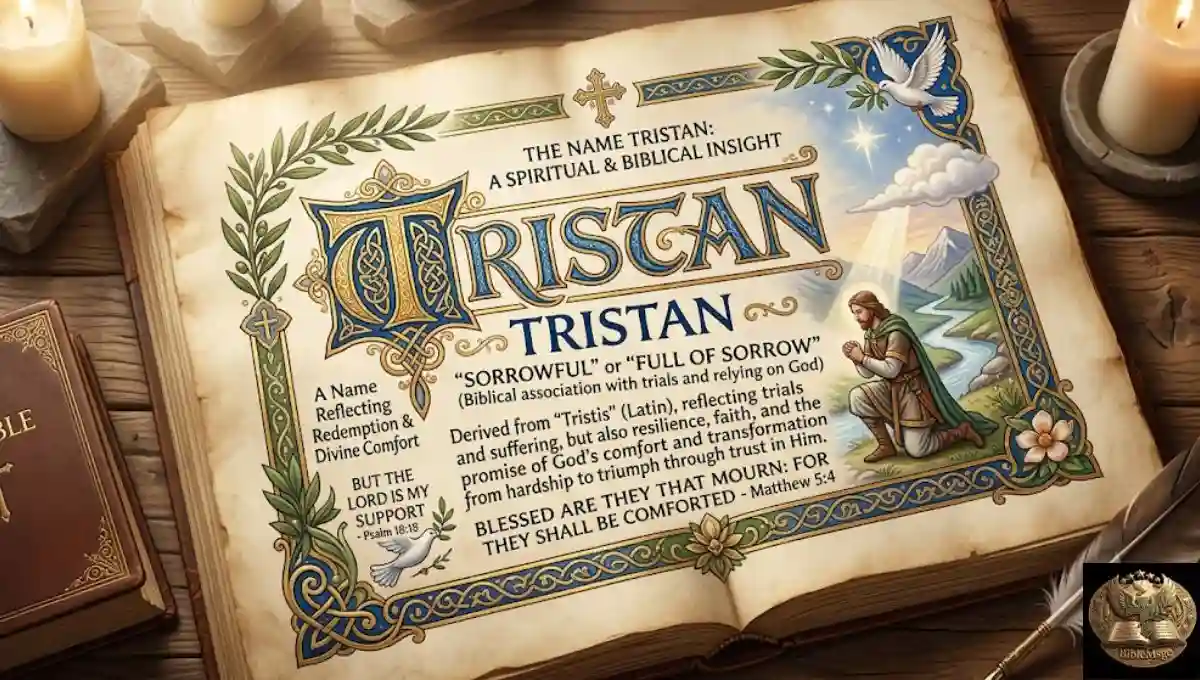
Parents searching for a meaningful name often want more than sound and style. They want a story behind it. The Tristan name carries a rich background rooted in old legend, and many people also connect it to Scripture through its themes of sorrow, growth, and faith.
This guide looks closely at the Tristan name from a biblical and spiritual angle. You will learn where the name comes from, what it symbolizes, and how its deeper meaning can speak to a person’s journey through hardship and hope.
Tristen Name Meaning Bible

Tristen is a common spelling variant of Tristan, and both carry the same root meaning tied to sorrow or sadness. While the name itself does not appear in any book of the Bible, its meaning connects naturally to biblical themes found throughout Scripture.
Biblical View of Sorrow
The Bible does not treat sorrow as something to avoid or hide. It treats sorrow as part of the human experience that God understands closely. Passages like Psalm 34:18 remind readers that God stays near to those with a broken heart. This view gives the Tristan name meaning bible connection a sense of comfort rather than heaviness.
Tristan Meaning in Hebrew
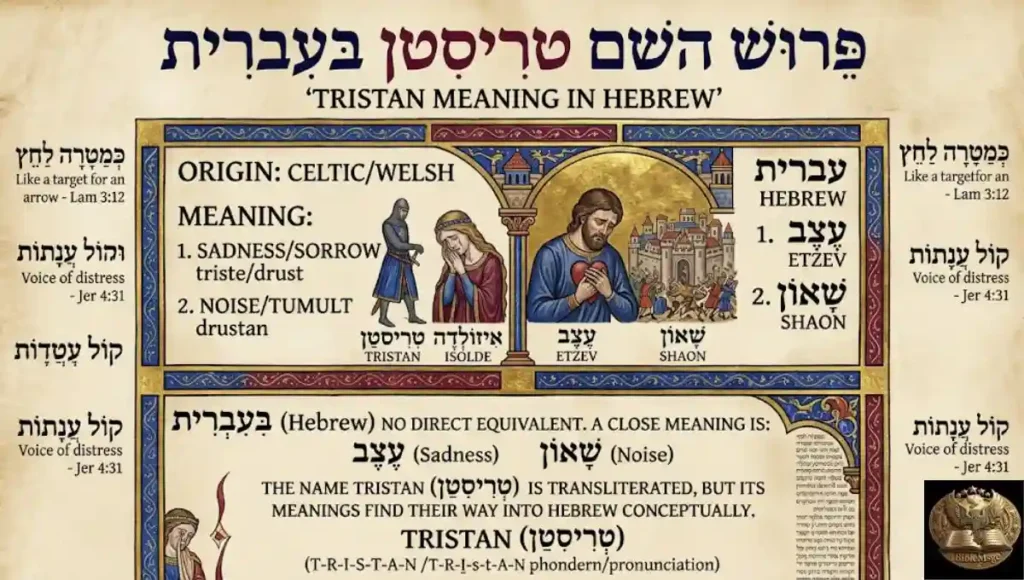
Tristan is not a Hebrew name. It has Celtic and Latin origins, most closely tied to the word “tristis,” meaning sad or sorrowful. There is no direct Hebrew translation, but Hebrew Scripture offers strong parallels in tone and message.
1. Sorrow and Depth of Heart
Hebrew poetry, especially in the Psalms, often speaks of a person’s inner sorrow as a doorway to closeness with God. This mirrors the emotional depth tied to the name Tristan.
2. Transformation Through Trials
Hebrew narratives frequently show people moving from grief to renewed purpose. Joseph, Job, and David all faced deep sorrow before reaching restoration, a pattern many associate with the spirit behind the Tristan name.
What Does Tristan Mean?

Tristan means “sorrowful” or “full of sadness.” The name traces back to Pictish and Celtic roots, later popularized through medieval romance literature, most famously the tale of Tristan and Isolde. Over time, the name grew beyond its sad origin and became associated with strength, loyalty, and quiet resilience.
What Does the Name Tristan Mean in the Bible?
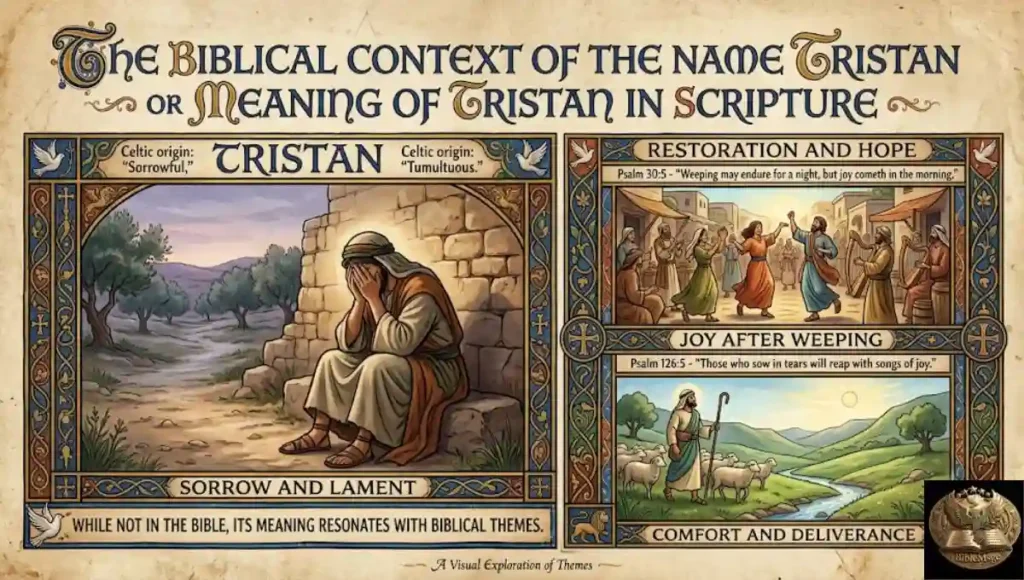
The name Tristan does not appear anywhere in the Bible. It is not a biblical name in the traditional sense. However, many parents and namesakes look at its meaning of sorrow and connect it to biblical figures who carried sorrow with grace, using Scripture to give the name added spiritual weight.
Bible Verses Related to Sorrow, Hope, and Faith

Here are verses often paired with the meaning behind the Tristan name:
- Psalm 34:18 – God stays close to the brokenhearted.
- Psalm 30:5 – Weeping may last through the night, but joy comes in the morning.
- Romans 5:3-4 – Suffering produces endurance, character, and hope.
- Isaiah 61:3 – Beauty can rise from ashes.
- 2 Corinthians 1:3-4 – God comforts us so we can comfort others.
These verses show a full arc: sorrow, endurance, and eventual hope, which lines up closely with the emotional journey tied to the name.
What Does Tristan Mean in the Bible?
Since Tristan is not a biblical name, its meaning “in the Bible” is really a spiritual interpretation rather than a scriptural fact. People draw meaning from how Scripture treats sorrow, empathy, and personal growth.
1. A Heart That Understands Suffering
A person named Tristan may be seen as someone with emotional depth, someone who understands pain in others because they carry an awareness of it themselves.
2. Compassion for Others
Biblical figures who suffered often became sources of comfort for others. This trait is frequently linked to the Tristan name meaning in a spiritual context.
3. Faith Through Difficult Seasons
The name’s root in sorrow does not suggest a life without joy. Instead, it points toward faith that holds steady even during hard seasons, much like biblical examples of perseverance.
More Read: 230+ Self Love Short Captions For Instagram: That Hit The Heart In 2026
Meaning of Tristan in the Bible
To be clear, Tristan holds no direct biblical meaning because it is not found in any biblical text, Hebrew or Greek. Its meaning is symbolic, built from cultural interpretation rather than scriptural reference.
Is the Name Tristan in the Bible?
No, Tristan is not in the Bible. It comes from Celtic legend and medieval literature, not from Hebrew, Greek, or Aramaic scripture. Anyone researching baby names with strict biblical roots should know this distinction before choosing it for religious reasons alone.
Tristan Meaning in Bible
Since the name is absent from Scripture, its “Bible meaning” is really about drawing parallels between its root definition and biblical themes of sorrow turning into strength.
1. Sorrow That Leads to Strength
James 1:2-4 speaks about trials producing steadfastness. This idea pairs naturally with the sorrowful root of Tristan, showing how hardship can shape character rather than break it.
2. Transformation Through Pain
Many biblical stories, including Job’s, show suffering followed by restoration. This gives the Tristan name a symbolic arc of moving from sadness to renewed strength.
Tristan in the Bible
To repeat clearly for search purposes, Tristan does not appear in the Bible as a name, place, or figure. It holds cultural and literary origin rather than scriptural origin.
Biblical Meaning of Sorrow and Its Connection to Tristan
Sorrow in the Bible is never treated as final. It is often a stage, not a destination. Ecclesiastes 3:4 states there is a time to weep and a time to laugh, showing sorrow as part of a natural cycle. This cyclical view connects well with the Tristan name, since sadness at the root does not define a permanent identity.
Faith Through Trials: What Tristan Symbolizes Spiritually
Spiritually, the name Tristan can symbolize a person who:
- Feels deeply and processes emotion honestly
- Grows through hardship rather than avoiding it
- Offers comfort to others because of personal experience with pain
- Holds onto hope even when circumstances feel heavy
Is Tristan a Good Christian Name for a Baby?
Tristan can work well as a name for a Christian family, though it is not a biblical name in origin. Many Christian parents choose names based on meaning and character rather than direct scriptural presence. If the sorrowful root is paired with a middle name carrying hope or strength, it can create a balanced meaning.
| Name Aspect | Tristan | Traditional Biblical Name (e.g., David) |
|---|---|---|
| Origin | Celtic/Latin | Hebrew |
| Found in Bible | No | Yes |
| Core Meaning | Sorrow, sadness | Beloved |
| Common Use | Literary, modern | Religious, historical |
| Christian Use Today | Popular, symbolic | Traditional, direct |
Spiritual Significance and Symbolism
A Season of Growth
Names rooted in sorrow are often reframed as names of growth. A hard beginning does not predict a hard life. Many use this idea when explaining the name’s meaning to their child later on.
A Tender and Compassionate Heart
People named Tristan are often described as sensitive to others’ pain, a trait valued highly in both biblical teaching and everyday relationships.
Biblical Interpretations in Dreams or Real Life
Some people search for meaning when the name Tristan appears in a dream or enters their life through a new relationship or birth. While the Bible does not directly interpret modern names in dreams, general biblical dream principles focus on themes rather than literal names. If sorrow or sadness appears in a dream tied to this name, it may reflect a season of emotional processing rather than a warning.
Practical Lessons & Faith Insights
- Sorrow is not weakness; the Bible treats it as part of growth.
- Comfort received often turns into comfort given to others.
- A name’s root meaning does not control a person’s future character.
- Faith can hold steady even when emotions feel heavy.
Conclusion
The Tristan name carries a meaning rooted in sorrow, but its story does not end there. Scripture consistently shows sorrow as a passing season rather than a fixed identity, and that same idea applies well to how people interpret this name today. Even though Tristan is not found in the Bible, its emotional depth pairs naturally with biblical lessons on endurance, compassion, and hope.
Choosing a name is a personal decision, and understanding its background helps parents feel confident in that choice. Whether used for its literary charm or its symbolic weight, Tristan can represent a heart that feels deeply and grows through life’s harder moments. That balance of sorrow and strength is what makes its meaning worth exploring.
FAQs
Is Tristan a biblical name?
No, Tristan is not found in the Bible. It comes from Celtic and Latin origins, not Hebrew or Greek scripture.
What does the name Tristan mean?
Tristan means “sorrowful” or “sad,” tracing back to old Celtic and Latin roots.
Does Tristan have a Hebrew meaning?
No, Tristan has no Hebrew origin. Its closest meaning comes from the Latin word “tristis.”
Can Christian parents use the name Tristan?
Yes, many Christian families choose Tristan for its meaning and sound, even though it is not a biblical name.
What Bible verses relate to the meaning of Tristan?
Verses like Psalm 34:18 and Psalm 30:5 relate closely, since they speak on sorrow turning into comfort and joy.
Is Tristan a popular name today?
Yes, Tristan remains a popular modern name, often chosen for its strong sound and literary background.
What is the spiritual meaning behind Tristan?
Spiritually, many connect it to depth of emotion, compassion for others, and growth through hardship.
Does Tristan mean anything negative?
Its root means sorrow, but this is not seen as negative. Many view it as a meaningful reminder that hardship can lead to strength.

Welcome to BibleMsge! I’m Abdul Mannan Haider. Christian Faith Writer | 10+ Years Bible Study Experience | Founder of (BibleMsge.com)
Sharing prayers, biblical Name Meanings ,Bible Verses, Spiritual Meanings and biblical wisdom to strengthen your faith.