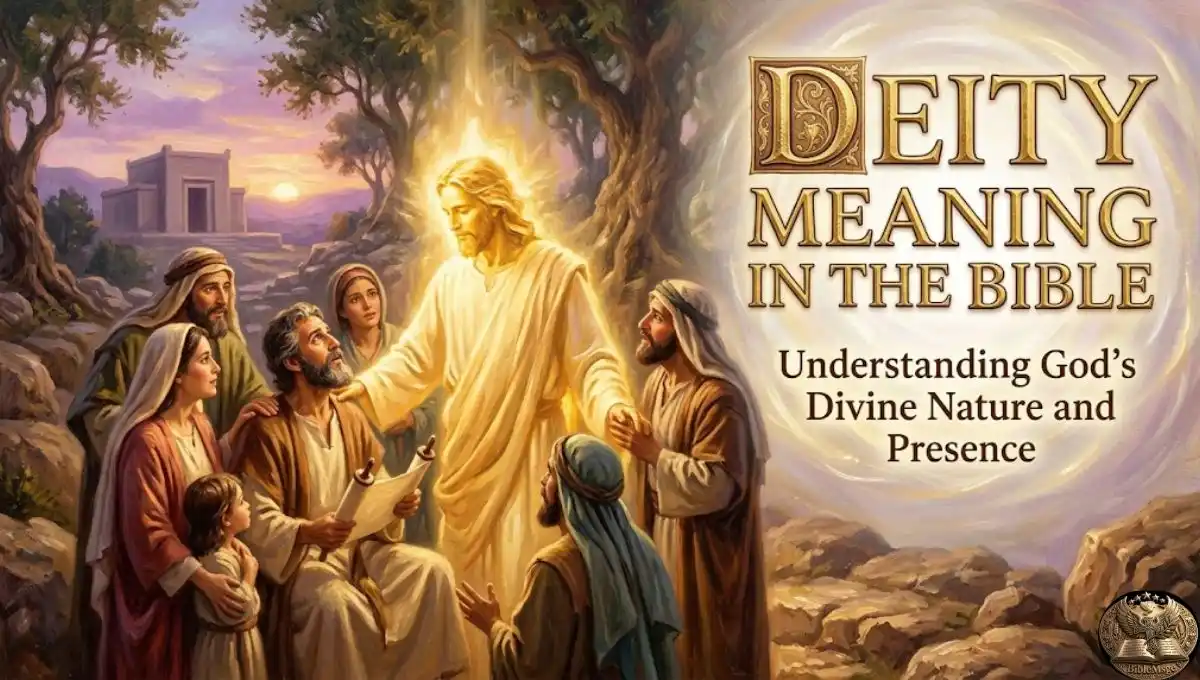
Have you ever heard the word “deity” and wondered what it truly means in the Bible? The Deity Meaning in the Bible goes beyond a simple definition it points to God’s divine nature, eternal power, and holy presence that exists beyond human understanding. It is a term that helps explain who God is in His fullest and most supreme form.
When people study Scripture, they often ask important questions like who God really is, whether Jesus is divine, and what it means for God to be described as a deity. The Bible reveals that God is not only powerful but also holy, eternal, and fully divine. Understanding the Deity Meaning in the Bible can deepen your faith, bring clarity to your spiritual journey, and help you experience a closer connection with God’s presence.
Biblical Meaning of Deity
1. Definition of Deity in the Bible
The word deity comes from the Latin deus, meaning God or divine being. In scripture, deity refers to the full set of qualities that make God who He is: eternally self-existent, all-knowing, all-powerful, and morally perfect. The biblical meaning of deity goes beyond a title that describes God’s very essence.
The Hebrew word El or Elohim and the Greek word Theos both carry the sense of a supreme divine being. When the Bible uses these terms, it is not simply referring to a powerful figure; it is pointing to the only uncreated source of all existence.
| Term | Language | Meaning |
| Elohim | Hebrew | God / Supreme Being |
| Theos | Greek | God / Divine Nature |
| El Shaddai | Hebrew | God Almighty |
| Kyrios | Greek | Lord / Master / Divine Authority |
2. Deity of God the Father
The deity of God the Father is the starting point of all biblical theology. Deuteronomy 6:4 declares, ‘The Lord our God, the Lord is one.’ This verse, called the Shema, is the cornerstone of monotheistic faith: one God, one divine nature, one supreme authority over all creation.
God’s divine nature includes several key attributes confirmed throughout scripture:
• Omnipotence unlimited power (Job 42:2)
• Omniscience complete knowledge of all things (Psalm 139:1–4)
• Omnipresence present everywhere simultaneously (Jeremiah 23:24)
• Eternal existence no beginning, no end (Psalm 90:2)
• Holiness morally perfect and set apart (Isaiah 6:3)
These are not just descriptions of what God can do, they define what God is. The deity of God the Father is not something He acquired; it is His nature from eternity.
3. Deity of Jesus Christ
The deity of Jesus Christ is one of the most debated and most clearly taught doctrines in the New Testament. Colossians 2:9 states plainly: ‘For in Christ all the fullness of the Deity lives in bodily form.’ This single verse is among the most direct affirmations that Jesus is not merely a prophet or a good teacher He is fully God in human flesh.
The Gospel of John opens with: ‘In the beginning was the Word, and the Word was with God, and the Word was God’ (John 1:1). This identifies Jesus as the eternal Word (Logos) who has always existed with God and as God. His divine nature was not something He earned through His earthly life; it was His identity before creation.
Jesus also claimed divine authority in ways that shocked His contemporaries. In John 8:58, He said, ‘Before Abraham was born, I am’ using the divine name I AM that God revealed to Moses (Exodus 3:14). To Jewish ears, this was an unmistakable claim to deity.
4. Deity and the Trinity
The Trinity is the biblical teaching that there is one God who exists eternally in three persons: the Father, the Son, and the Holy Spirit. Each person is fully God; there are not three gods, but one divine nature shared by three distinct persons.
Matthew 28:19 records Jesus commanding His disciples to baptize ‘in the name of the Father and of the Son and of the Holy Spirit’ one name, three persons. This is the clearest single-verse summary of the Trinitarian nature of God’s deity in the Bible.
| Person | Role | Key Verse |
| God the Father | Creator and Sovereign | Isaiah 44:6 |
| God the Son (Jesus) | Savior and Mediator | John 1:1; Colossians 2:9 |
| God the Holy Spirit | Sanctifier and Comforter | Acts 5:3–4; John 14:26 |
Spiritual Significance and Symbolism of Deity
1. Deity as God’s Presence
Throughout the Bible, God’s deity is not experienced as a distant abstract concept, it is felt as a living presence. In Exodus, God’s presence fills the tabernacle as a cloud by day and a pillar of fire by night (Exodus 13:21). This visible manifestation of God’s divine nature reminded Israel that their God was not a carved idol but a living, present deity.
In the New Testament, Jesus is called Immanuel, which literally means ‘God with us’ (Matthew 1:23). God’s deity stepped into human history not as a symbol but as a person, walking among people, healing, teaching, and suffering.
2. Deity and Human Faith
Understanding the deity meaning in the Bible transforms how people relate to God. When a believer grasps that Jesus is not just a moral example but the living God, faith becomes more than intellectual agreement; it becomes personal trust in an all-powerful, ever-present divine being.
Romans 10:9 connects this directly to salvation: ‘If you declare with your mouth, Jesus is Lord, and believe in your heart that God raised him from the dead, you will be saved.’ The word Lord here (Greek: Kyrios) carries full divine weight. Confessing Jesus as Lord is confessing His deity.
3. Transformation Through Knowing God
The Bible teaches that knowing God’s divine nature changes people from the inside out. Second Peter 1:3–4 says that God’s divine power has given believers ‘everything we need for a godly life’ and that through His promises we ‘participate in the divine nature.’ This is one of the most extraordinary statements in all of scripture human beings are invited into a relationship with deity itself.
This transformation is not about humans becoming divine, but about God’s holy nature reshaping human character through faith, obedience, and the work of the Holy Spirit.
Read Also: Ryan Name Meaning in Bible: Spiritual Significance
Deity in Daily Life and Spiritual Experience
1. Recognizing God’s Deity in Life
Romans 1:20 teaches that God’s invisible qualities ‘his eternal power and divine nature’ are clearly seen in creation, so that people are without excuse. Every sunrise, every heartbeat, and every act of human conscience carries the fingerprint of a divine being.
For the Christian, recognizing God’s presence in daily life is not superstition, it is theological awareness. Knowing the deity meaning in the Bible means looking at ordinary moments through the lens of God’s sovereignty and care.
2. Deity in Christian Belief
Christian belief is built entirely on the foundation of God’s deity. Without the deity of Jesus Christ, there is no atoning sacrifice sufficient to pay for human sin. Without the deity of the Holy Spirit, there is no divine power for Christian living. Without the deity of the Father, there is no sovereign authority over history and eternity.
The Nicene Creed (AD 325) was written precisely to protect these truths. It affirms Jesus as ‘God from God, Light from Light, true God from true God’ language designed to guard the biblical teaching of Christ’s full deity against those who denied it.
3. Responding to God’s Deity
The correct response to God’s deity is not passive admiration but active worship, obedience, and trust. Isaiah, when he saw a vision of God’s glory, fell undone before His holiness (Isaiah 6:1–5). The disciples, when they witnessed Jesus calm a storm, asked in awe, ‘Who is this?’ (Mark 4:41). Encountering real deity always produces a response.
For believers today, that response takes the shape of daily surrender, regular worship, honest prayer, and a life oriented around God’s authority rather than personal ambition.
Practical Lessons and Faith Insights
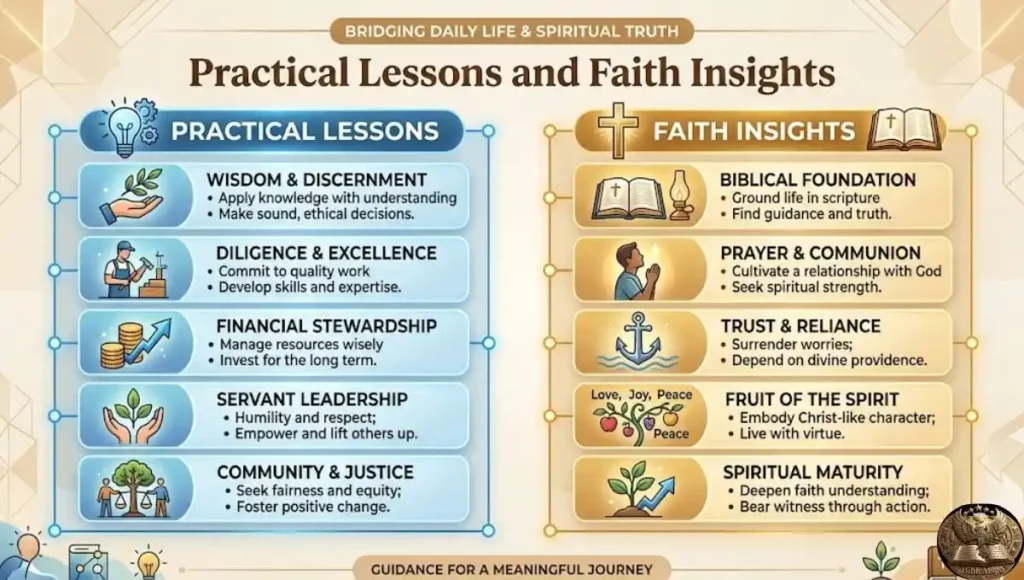
Understanding the deity’s meaning in the Bible is not reserved for theologians; it has immediate practical value for everyday faith.
• God’s omnipotence means no problem you face is too large for Him to handle.
• God’s omniscience means He already knows your struggles before you voice them in prayer.
• Christ’s deity means His forgiveness has infinite weight sufficient for any sin, past or future.
• The Holy Spirit’s deity means His guidance and comfort are not human wisdom but divine counsel.
• The Trinity reveals that God is inherently relational: Father, Son, and Spirit exist in eternal communion and He invites humanity into that relationship through Christ.
These are not abstract truths. They change the way believers pray, handle fear, make decisions, and treat other people. A God of full deity is worthy of full trust.
The Role of Deity in Christian Worship and Prayer
1. Worship as a Response to God’s Divine Nature
Worship in Christianity is not a ritual performed to earn divine favor, it is the natural, fitting response of creatures before their Creator. Revelation 4:11 captures this: ‘You are worthy, our Lord and God, to receive glory and honor and power, for you created all things.’ The worthiness being celebrated is God’s deity itself His eternal, uncreated, sovereign nature.
Understanding that Jesus is fully God transforms corporate worship from a social event into an encounter with the divine. When believers sing, pray, and gather in His name, they are not remembering a historical figure they are addressing the living God.
2. Prayer and Connection with the Divine
Prayer is one of the clearest expressions of belief in God’s deity. To pray is to acknowledge that a personal, all-knowing, all-powerful God hears and responds to human beings. Hebrews 4:16 invites believers to ‘approach God’s throne of grace with confidence’ the throne of the God whose deity makes that grace infinite.
Jesus taught His disciples to address God as Father (Matthew 6:9), combining the intimacy of a family relationship with the reverence owed to the divine. This balance of closeness and awe is only possible because of what God’s nature truly is.
3. Reverence and Submission to God
Proverbs 9:10 says, ‘The fear of the Lord is the beginning of wisdom.’ This fear is not terror but deep reverence, a recognition of God’s absolute authority as the supreme divine being. Submitting to God’s deity means allowing His word, His purposes, and His character to shape all of life.
Practically, this means Christians bring their plans, relationships, and decisions under God’s authority not because He is a distant ruler, but because a God of full deity is also a God of perfect love and wisdom.
Read Also: 40 Bible Verses About the Sunset
Biblical Verses That Reveal God’s Deity
1. Old Testament Foundations of God’s Deity
The Old Testament is rich with declarations of God’s divine nature. These verses are not merely poetic they are doctrinal anchors for understanding the deity of God:
• Isaiah 45:5 ‘I am the Lord, and there is no other; apart from me there is no God.’
• Psalm 90:2 ‘From everlasting to everlasting you are God.’ (God’s eternal nature)
• Deuteronomy 4:35 ‘The Lord is God; besides him there is no other.’
• Exodus 3:14 God reveals His name as I AM the self-existent, uncaused being.
2. New Testament Proof of Jesus’ Divinity
The New Testament provides multiple layers of evidence for the deity of Jesus Christ. These go beyond miraculous acts to direct claims and apostolic teaching:
• John 1:1 ‘The Word was God.’ Jesus as eternal Logos.
• Colossians 2:9 ‘In Christ all the fullness of the Deity lives in bodily form.’
• John 10:30 Jesus said, ‘I and the Father are one.’
• Hebrews 1:3 Jesus is ‘the radiance of God’s glory and the exact representation of his being.’
• Titus 2:13 Jesus is described as ‘our great God and Savior.’
3. Key Scriptures About the Holy Spirit
The deity of the Holy Spirit is confirmed in passages that treat Him as a divine person, not merely a force:
• Acts 5:3–4 Lying to the Holy Spirit is equated with lying to God.
• 1 Corinthians 2:10–11 The Spirit searches the deep things of God, showing divine omniscience.
• Genesis 1:2 The Spirit of God was hovering over the waters at creation present at the beginning of all things.
Common Questions About (Deity Meaning in the Bible)
1. Is Deity the Same as God?
Deity refers to the divine nature or quality of being God, while God is the personal being who possesses that nature. In the Bible, God alone possesses true deity it is not a category He belongs to but a nature He IS.
2. Why is Jesus Considered Divine?
Jesus is considered divine because both He and the New Testament authors explicitly taught it. Colossians 2:9 states that all the fullness of deity dwells in Him bodily, and John 1:1 identifies Him as God from eternity. His resurrection confirmed these claims with the ultimate divine act.
3. What Does the Trinity Mean for Believers?
The Trinity means believers have access to a God who is relational by nature Father, Son, and Spirit in eternal communion. Salvation involves the Father’s plan, the Son’s sacrifice, and the Spirit’s indwelling, all working together as one divine being.
4. What Does Deity Mean in Simple Words?
Deity simply means ‘the state of being God.’ It describes all the qualities that make God uniquely God eternal, all-powerful, all-knowing, holy, and self-existent. No created being has deity; only God does.
5. Does the Bible Use the Word Deity?
Yes. The clearest use is in Colossians 2:9, where the Greek word theotes (translated deity or Godhead) refers to the full divine nature residing in Jesus Christ. Romans 1:20 also uses the Greek word theiotes, referring to God’s divine nature seen in creation.
6. How is the Deity of Jesus Different From Regular Humans?
Jesus shares full human nature and full divine nature what theologians call the hypostatic union. Regular humans are created beings; Jesus is the uncreated Word of God who took on human flesh. His deity means His atonement has infinite value, sufficient for all sin.
7. Can Anyone Become a Deity According to the Bible?
No. The Bible teaches that God alone is deity by nature. Second Peter 1:4 speaks of believers ‘participating in the divine nature,’ but this means sharing God’s moral character through the Holy Spirit not becoming a god. The Creator-creature distinction remains permanently in biblical theology.
Conclusion about (Deity Meaning in the Bible)
The deity meaning in the Bible is one of the most important and life-shaping truths in all of Christian faith. God’s divine nature is not a philosophical abstraction, it is the living reality of an eternal, holy, all-powerful being who created the universe, entered human history in Jesus Christ, and continues to work in the world through the Holy Spirit.
Understanding the deity of God the Father, the deity of Jesus Christ, and the deity of the Holy Spirit gives Christians a firm foundation for faith, worship, and daily life. It answers the deepest questions about who God is, why Jesus matters, and how the Spirit works. It shapes prayer, fuels worship, and transforms character.
Whether you are new to the Bible or a seasoned student of theology, grasping the deity meaning in the Bible is the beginning of everything. Because to know God’s divine nature is to know God Himself and that is the whole point of scripture.

Welcome to BibleMsge! I’m Abdul Mannan Haider. Christian Faith Writer | 10+ Years Bible Study Experience | Founder of (BibleMsge.com)
Sharing prayers, biblical Name Meanings ,Bible Verses, Spiritual Meanings and biblical wisdom to strengthen your faith.